
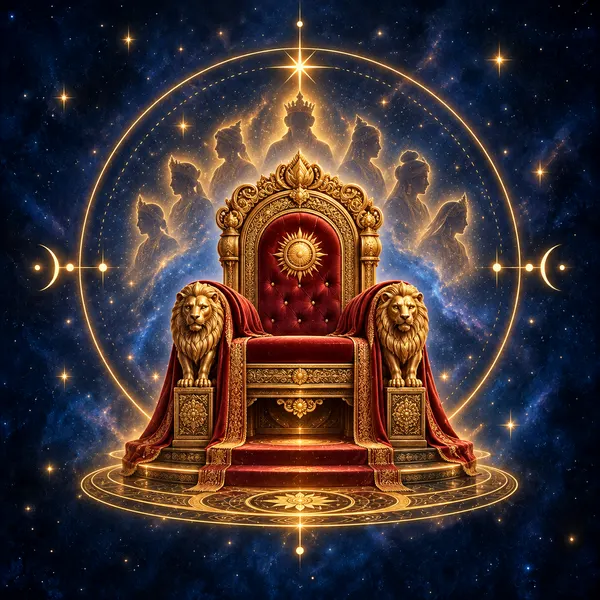
Magha
Magha is the throne, and its deities are the Pitris, the ancestors. Ketu rules it. This is inherited authority: position that came to you through a line rather than something you built alone, and the obligation that arrives with it. Magha carries dignity naturally and expects respect, sometimes before earning it. Ketu's rulership means the inheritance is karmic as much as material — a family pattern, a name, an unfinished debt. Its shadow is entitlement, and living on borrowed standing. A month on Magha turns toward what you were given: the family story, the obligation, the seat you occupy. Honour it properly or set it down honestly. Ancestral matters resolve unusually well under this nakshatra.
Jupiter in Magha 31 Oct – 1 Nov
Jupiter is transiting your nakshatra, which is the most fortunate visit on this list. Its themes expand: opportunity, teachers, growth, and a general sense that doors are open. Jupiter stays about a year in a sign, so this is a season rather than a moment, and worth planning around. The shadow is scale — Jupiter enlarges without discriminating, so it grows the excess along with the good.
Ketu in Magha 1 Oct – 1 Nov
Ketu is transiting your nakshatra, which thins its themes out. Interest drains from this area of life, and what remains is an old competence you cannot fully account for. It is excellent for research, practice and letting something go, and frustrating if you were hoping to build visible results here. Ketu removes rather than adds, and what it removes is usually something you were holding out of habit.
Your ruler: Ketu
Your nakshatra is ruled by Ketu, so your month has a thread of detachment running through it. Where Ketu sits is where something is quietly being released, and where an old skill surfaces without explanation. That is the area to stop forcing.
Moon days 6 Oct
The Moon passes through your nakshatra for about a day each month, and those are the days its themes run closest to the surface. They are good for anything needing instinct rather than analysis, and for beginnings that want emotional weight behind them. The dates are listed below. They are short windows, so use them deliberately rather than waiting for a mood to arrive.
What changes this month
These are the month's actual turning points — the dates a graha changes sign, turns retrograde or direct, and the two lunations. A sign change is the moment a graha starts asking a different question, so the days around one are where a month visibly shifts rather than simply continues. A station matters more than an ingress: a graha standing still before it turns tends to bring whatever it governs to a head, and the effect is felt for several days either side rather than on the date itself. The Moon's own sign changes are left out here because it moves through one every two and a half days, which is noise at this scale; its passage through your nakshatra is given its own section above.
- 3 OctVenus turns retrogradeVenus turning retrograde sends affection and value backwards. Old attachments reappear and prices stop meaning what they did; it favours reconsidering what something is worth over committing to it.
- 10 OctNew Moon in Virgo, HastaA new Moon is the Sun and Moon in the same sign, which is the dark point of the cycle rather than a bright one. It is the beginning of a lunar month: the sign and nakshatra it falls in name what is being started, and the fortnight after it is when a start made here has the tide behind it.
- 17 OctSun enters LibraThe Sun changing sign moves the month's centre of gravity. Where it goes is where attention, authority and the sense of what matters concentrate for the next four weeks, and whatever that area of life has been waiting for tends to get looked at squarely rather than deferred again.
- 24 OctMercury turns retrogradeMercury turning retrograde folds the month's talking back on itself. Plans get revisited, old correspondence resurfaces, and arrangements made quickly tend to need making again. It is a poor window for signing and a good one for rereading.
- 26 OctFull Moon in Aries, AshwiniA full Moon is the Sun and Moon opposite each other, so whatever has been building becomes visible and, often, becomes a question of balance between two things rather than one. The sign and nakshatra it falls in name where that visibility lands. It is a culmination, not a beginning.
- 31 OctJupiter enters LeoJupiter changes sign about once a year, so this is a genuine turn rather than a monthly variation. It marks where growth, permission and good faith are available for the next twelve months — and, less comfortably, where things are inclined to overreach.
The wider chapter
Behind every month sits a slower story. Rahu and Ketu hold a sign for about eighteen months, so the axis they occupy is the chapter this whole run of months belongs to, not a monthly variable. Ketu's sign shows where something is being emptied out and released across the period; Rahu's shows where the appetite and the ambition are pulling. When that axis changes sign the chapter genuinely turns, and it is worth marking. The current placement and the date it changes are given with this reading.